 Actor Potrayal
Actor Potrayal
Actor Potrayal
 Actor Potrayal
Dosage and Administration1
Tablets should be taken on an empty stomach with water.1
Prior Standard
3 mg x 5 tablets
An 80-kg patient treated for strongyloidiasis at 200 mcg/kg requires 16 mg of ivermectin—five 3 mg tablets.

5 tablets
With 6 mg
6 mg x 2½ tablets
The same 80-kg patient receives the same 16 mg dose—now delivered as two and a half 6 mg tablets.
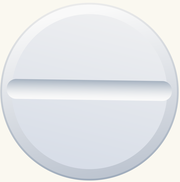

2½ tablets
Illustrative example based on FDA-labeled weight-based dosing for strongyloidiasis (200 mcg/kg single oral dose).1 Breakable tablet (scored on one face).
Indications and Usage
Ivermectin tablets are indicated for the treatment of the following infections.1
Strongyloidiasis of the intestinal tract
Ivermectin tablet is indicated for the treatment of intestinal (i.e., nondisseminated) strongyloidiasis due to the nematode parasite Strongyloides stercoralis.
Onchocerciasis
Ivermectin tablet is indicated for the treatment of onchocerciasis due to the nematode parasite Onchocerca volvulus.
Please click here for full Prescribing Information.
A semisynthetic anthelmintic, delivered at the strength your dosing calls for.
Ivermectin tablet is a semisynthetic, anthelmintic agent for oral administration, derived from the avermectins — a class of broad-spectrum antiparasitic agents isolated from fermentation products of Streptomyces avermitilis.1
Ivermectin Tablets, USP 6 mg from Advagen are white to off-white, round, uncoated tablets, plain with a break line on one side and debossed with “^I5” on the other.1
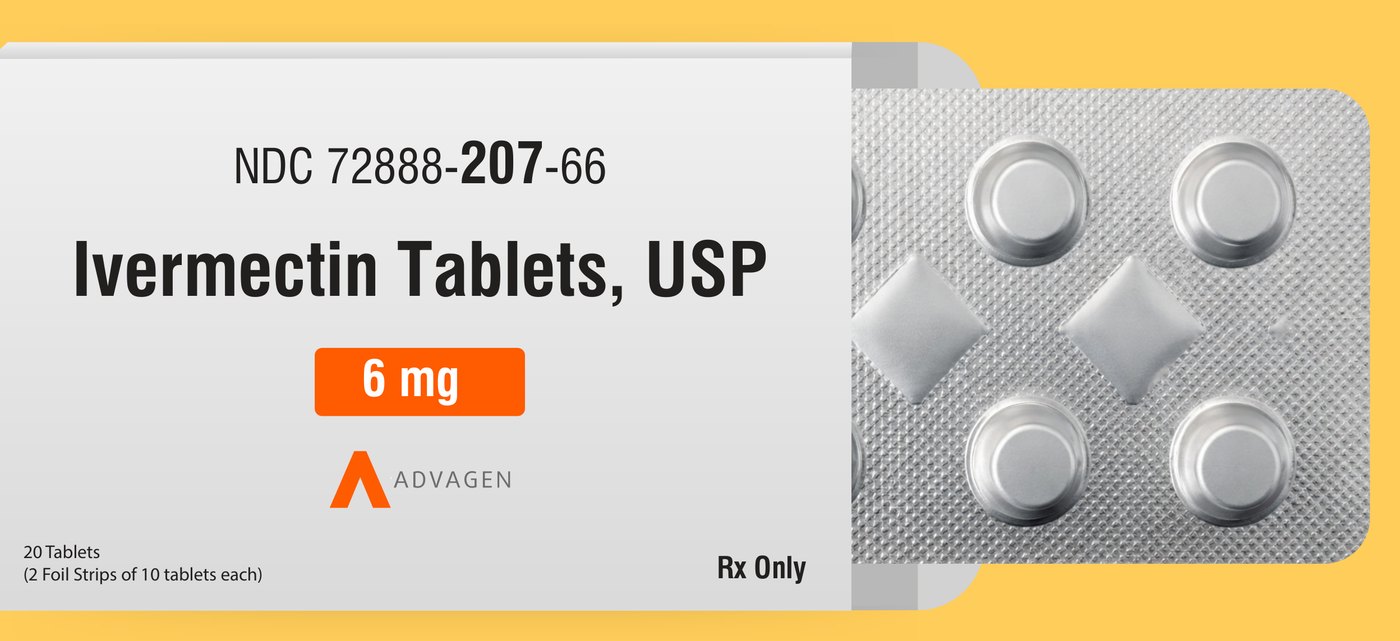
- NDC
- 72888-207-66
- Strength
- 6 mg
- Package
- 20 tablets (2x10 blisters)
- Status
- Rx Only
Safety and Tolerability1
The following adverse reactions were reported as possibly, probably, or definitely related to ivermectin tablets:
Body as a Whole: asthenia/fatigue, abdominal pain
Gastrointestinal: anorexia, constipation, diarrhea, nausea, vomiting
Nervous System/Psychiatric: dizziness, somnolence, vertigo, tremor
Skin: pruritus, rash, and urticaria
Please click here for full Prescribing Information.
Actor Potrayal
References
- Ivermectin 6 mg Tablet. Prescribing information. Advagen Pharmaceuticals; 2025.
- U.S. Food and Drug Administration. ANDA 215922 Approval Letter: Ivermectin Tablets USP, 3 mg and 6 mg. Office of Generic Drugs, Center for Drug Evaluation and Research. January 22, 2025. Available at: accessdata.fda.gov/drugsatfda_docs/appletter/2025/215922Orig1s000ltr.pdf
Important Safety Information
Indications and Usage
Strongyloidiasis of the intestinal tract
Ivermectin tablet is indicated for the treatment of intestinal (i.e., nondisseminated) strongyloidiasis due to the nematode parasite Strongyloides stercoralis.
Onchocerciasis
Ivermectin tablet is indicated for the treatment of onchocerciasis due to the nematode parasite Onchocerca volvulus.
Contraindications
Ivermectin tablets are contraindicated in patients who are hypersensitive to any component of this product.
Warnings
Historical data have shown that microfilaricidal drugs, such as diethylcarbamazine citrate (DEC-C), might cause cutaneous and/or systemic reactions of varying severity (the Mazzotti reaction) and ophthalmological reactions in patients with onchocerciasis. These reactions are probably due to allergic and inflammatory responses to the death of microfilariae. Patients treated with ivermectin tablets for onchocerciasis may experience these reactions in addition to clinical adverse reactions possibly, probably, or definitely related to the drug itself.
Neurotoxicity with the use of ivermectin, including alteration of consciousness of variable severity (e.g., somnolence/drowsiness, stupor, and coma), confusion, disorientation and death, has been reported in patients without onchocerciasis or in patients with onchocerciasis in the absence of Loa loa infection. These reactions have generally resolved with supportive care and the discontinuation of ivermectin.
Precautions
General
After treatment with microfilaricidal drugs, patients with hyperreactive onchodermatitis (sowda) may be more likely than others to experience severe adverse reactions, especially edema and aggravation of onchodermatitis.
Information for Patients
Ivermectin tablets should be taken on an empty stomach with water.
Strongyloidiasis: The patient should be reminded of the need for repeated stool examinations to document clearance of infection with Strongyloides stercoralis.
Onchocerciasis: The patient should be reminded that treatment with ivermectin tablets do not kill the adult Onchocerca parasites, and therefore repeated follow-up and retreatment is usually required.
Drug Interactions
Post-marketing reports of increased INR (International Normalized Ratio) have been rarely reported when ivermectin was co-administered with warfarin.
Carcinogenesis, Mutagenesis, Impairment of Fertility
Long-term studies in animals have not been performed to evaluate the carcinogenic potential of ivermectin.
Ivermectin was not genotoxic in vitro in the Ames microbial mutagenicity assay of Salmonella typhimurium strains TA1535, TA1537, TA98, and TA100 with and without rat liver enzyme activation, the Mouse Lymphoma Cell Line L5178Y (cytotoxicity and mutagenicity) assays, or the unscheduled DNA synthesis assay in human fibroblasts.
Ivermectin had no adverse effects on the fertility in rats in studies at repeated doses of up to 3 times the maximum recommended human dose of 200 mcg/kg (on a mg/m2/day basis).
Pregnancy, Teratogenic Effects
Ivermectin has been shown to be teratogenic in mice, rats, and rabbits when given in repeated doses of 0.2, 8.1, and 4.5 times the maximum recommended human dose, respectively (on a mg/m2/day basis). Teratogenicity was characterized in the three species tested by cleft palate; clubbed forepaws were additionally observed in rabbits. These developmental effects were found only at or near doses that were maternotoxic to the pregnant female. Therefore, ivermectin does not appear to be selectively fetotoxic to the developing fetus. There are, however, no adequate and well-controlled studies in pregnant women Ivermectin should not be used during pregnancy since safety in pregnancy has not been established.
Nursing Mothers
Ivermectin is excreted in human milk in low concentrations. Treatment of mothers who intend to breast-feed should only be undertaken when the risk of delayed treatment to the mother outweighs the possible risk to the newborn.
Pediatric Use
Safety and effectiveness in pediatric patients weighing less than 15 kg have not been established.
Geriatric Use
In general, treatment of an elderly patient should be cautious, reflecting the greater frequency of decreased hepatic, renal, or cardiac function, and of concomitant disease or other drug therapy.
Strongyloidiasis in Immunocompromised Hosts
In immunocompromised (including HIV-infected) patients being treated for intestinal strongyloidiasis, repeated courses of therapy may be required. Several treatments, i.e., at 2-week intervals, may be required, and cure may not be achievable. Control of extra-intestinal strongyloidiasis in these patients is difficult, and suppressive therapy, i.e., once per month, may be helpful.
Adverse Reactions
Strongyloidiasis
The following adverse reactions were reported as possibly, probably, or definitely related to ivermectin tablets:
Body as a Whole: asthenia/fatigue, abdominal pain.
Gastrointestinal: anorexia, constipation, diarrhea, nausea, vomiting.
Nervous System/Psychiatric: dizziness, somnolence, vertigo, tremor.
Skin: pruritus, rash, and urticaria.
Onchocerciasis
The following ophthalmological side effects do occur due to the disease itself but have also been reported after treatment with ivermectin tablets: abnormal sensation in the eyes, eyelid edema, anterior uveitis, conjunctivitis, limbitis, keratitis, and chorioretinitis or choroiditis. These have rarely been severe or associated with loss of vision and have generally resolved without corticosteroid treatment.
Overdosage
Cases of neurotoxicity, including alteration of consciousness of variable severity (e.g., somnolence/drowsiness, stupor, and coma), confusion, disorientation and death have been reported with recommended dosage and overdosage of ivermectin.
In accidental intoxication with, or significant exposure to, unknown quantities of veterinary formulations of ivermectin in humans, either by ingestion, inhalation, injection, or exposure to body surfaces, the following adverse effects have been reported most frequently: rash, edema, headache, dizziness, asthenia, nausea, vomiting, and diarrhea. Other adverse effects that have been reported include: seizure, ataxia, dyspnea, abdominal pain, paresthesia, urticaria, and contact dermatitis.
In case of accidental poisoning, supportive therapy, if indicated, should include parenteral fluids and electrolytes, respiratory support (oxygen and mechanical ventilation if necessary) and pressor agents if clinically significant hypotension is present. Induction of emesis and/or gastric lavage as soon as possible, followed by purgatives and other routine anti-poison measures, may be indicated if needed to prevent absorption of ingested material.
To report SUSPECTED ADVERSE REACTIONS, contact Advagen Pharma Ltd. at 1-866-488-0312 or FDA at 1-800-FDA-1088 or www.fda.gov/medwatch.
Please see full prescribing information at https://ivermectin6.com/
Advagen Pharma ltd. All rights reserved IVR-06-03-26
©2026 Advagen Pharma. All Rights Reserved.